Lighting Knowledge
Mini Football Field Lighting: How Many LED Floodlights for 5-a-side and 7-a-side Pitches?
How many 200W floodlights does a 7-a-side pitch need? A quick calculation, pole layout and the mistakes that cause glare and uneven lighting on football fields.
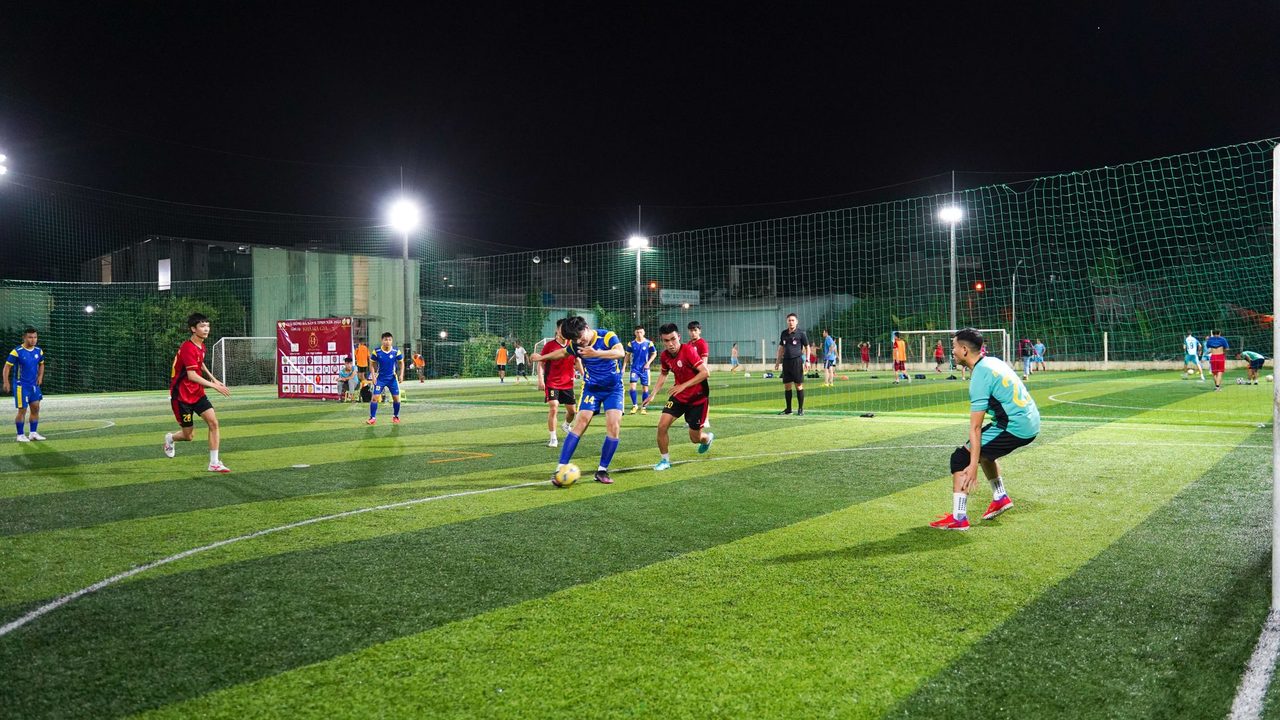
Mini football fields are booming in both cities and the countryside, and most of a field's revenue comes from evening matches. That means the mini football field lighting system directly determines the players' experience and how much the owner pays for electricity each month. For dealers, this is a good-value type of project that often brings long-term replacement and warranty demand. Below is a quick way to calculate it when advising field owners.
How bright should a mini football field be?
Brightness on the playing surface is measured in lux. Some common reference levels:
- Amateur pitches, friendly matches: about 200–300 lux
- High-end rental pitches with video recording or livestreaming: about 300–500 lux
- Professional televised tournaments: much higher, requiring specialist lighting design
For most rental mini pitches, a target of 250–300 lux is reasonable: bright enough to see the ball clearly, with moderate electricity costs.
Field size and pole layout
- 5-a-side pitch: usually about 20 × 40 m. Place 4–6 poles 8–10 m high along both sides of the pitch.
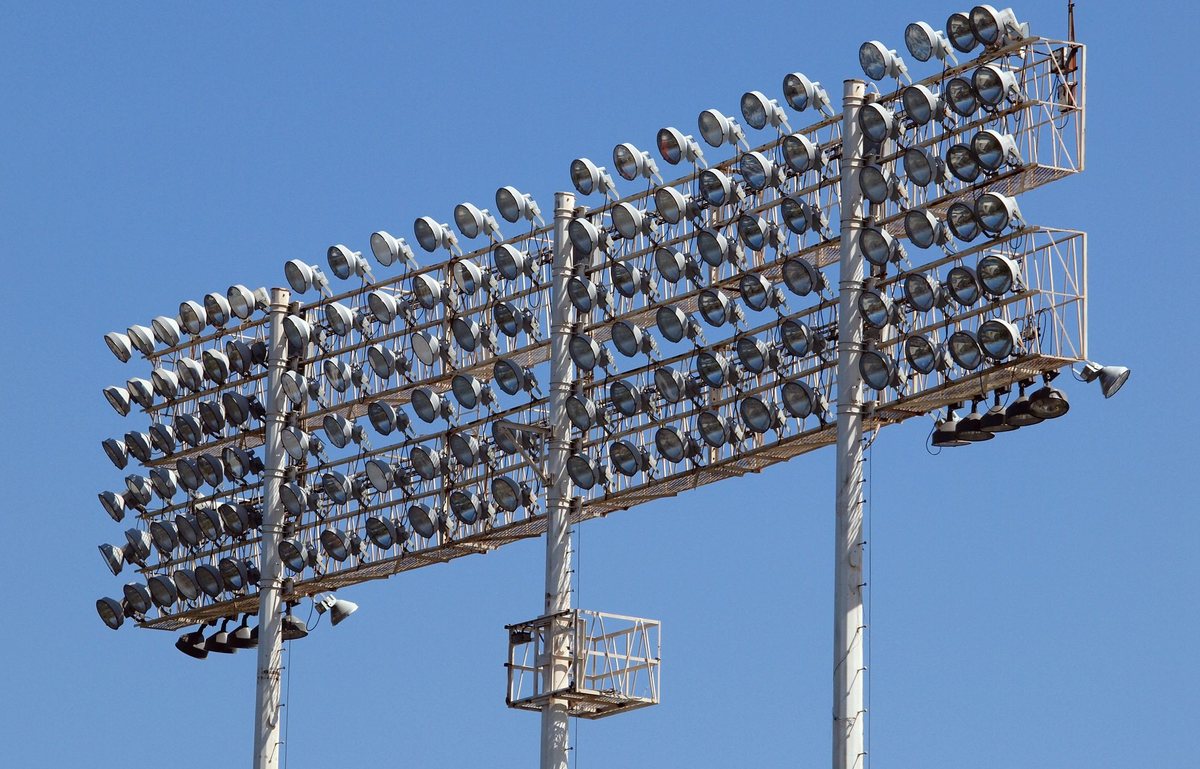
- 7-a-side pitch: usually about 30 × 60 m. Place 6–8 poles 10–12 m high along both sides of the pitch.
Place poles outside the touchlines with lights angled into the field. Avoid placing lights behind the goals shining straight onto the field, as they can easily dazzle the goalkeepers.
Quick floodlight quantity example
Formula: Total luminous flux required = Illuminance × Area ÷ Utilization factor. For fields with lights on both sides, the utilization factor can be taken as about 0.65.
Example: a 7-a-side pitch of about 1,800 m², target 250 lux:
- Total luminous flux ≈ 250 × 1,800 ÷ 0.65 ≈ 690,000 lumens
- Using 200W floodlights with an efficacy of about 130 lm/W, each light gives about 26,000 lumens
- Lights needed ≈ 690,000 ÷ 26,000 ≈ 26–28 lights, spread evenly over 6–8 poles
For a 5-a-side pitch of about 800 m², the same calculation gives about 12 floodlights of 200W, spread over 4–6 poles.
This is an estimate for a preliminary quote. For the actual installation, run a lighting simulation to adjust each fixture's tilt angle so the field is evenly lit.
Choosing Floodlights for Mini Football Fields
- Suitable beam angle: narrow-beam lights or long-throw lenses carry light to the middle of the field; wide angles are used for areas near the poles.
- Anti-glare: prefer lights with shields or lenses that limit light spilling into the sky and into players' eyes.
- IP66 rating: outdoor lights must withstand heavy rain and dust. See also our article what IP65 and IP66 ratings mean.
- Surge protection: tall outdoor poles are vulnerable during thunderstorms, so choose lights with good surge protection.
- Aluminum housing, good heat dissipation: pitches often keep lights on for 4–6 hours every evening.
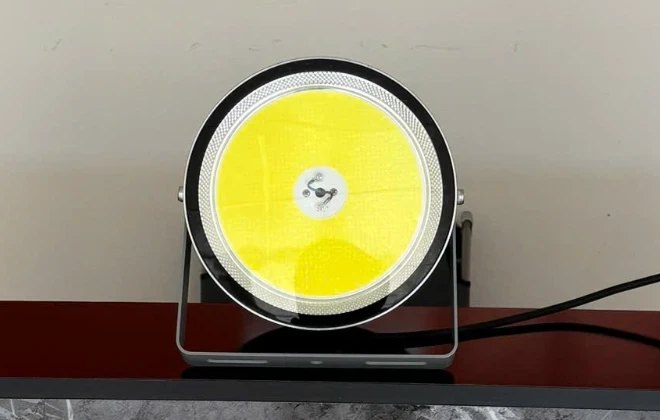
Suitable lines: LED stadium lights for large fields and tall poles, and LED floodlights for small fields and auxiliary areas.
Common mistakes when installing football-field lights
- Poles that are too low force the lights to aim almost horizontally, causing glare
- Clustering lights in the middle of the field, leaving the four corners and goal areas dark
- Choosing lights labelled with high wattage but with low actual wattage, leaving the field under-lit
- Ignoring the power bill: low-efficiency lights can cost the field owner much more each month
Conclusion
A good mini football field lighting system helps owners attract evening customers and save on electricity in the long run. Once you have the field size and pole positions, send the details to the factory to get the number of lights, beam angles and a complete quote.
Last updated: 28/10/2026